
Lindyhop and other jazz dances
I have been interested in the history of jazz music and dance since my early teens, but I have been diving into the world of jazz since 2006, when I started dancing jazz dances in Vilnius (lindy hop, charleston, tap, solo jazz). The analysis of various books and other sources, as well as communication with historians and researchers of jazz dance and music and musicians from all over the world helped me to gather quite enough knowledge about jazz culture.
Since 2007 I became a member of the "Lindyhop.lt" association, which spread and continues to spread jazz dance and music culture in Lithuania and abroad.
In the same year, 2007, I started collecting jazz records, DJing at jazz dance events both in Lithuania. Also, in 2007, I started teaching regulary in Lithuania, and since 2010 I have been doing it internationally all over the world, thus spreading not only the knowledge of jazz dance and music, but also promoting the name of Lithuania.
Since 2007, I have contributed to the organization of the international jazz dance and traditional jazz music "Harlem" festival. Until 2017 I was responsible for the evening program, performers, performances, in other words - artistic director.
In December 2008, I initiated and founded the traditional jazz street ensemble "Rhythm Junkies", and since 2011, a band "Home Jazz Five", now known as "Home Jazz Band", that contains some of the most famous Lithuanian jazz musicians.
Since 2014, I have organized the international jazz dance and music festival "All Lithuanian Weekend", where all the performers (teachers, musicians and DJs) are Lithuanians, thus showing the strength and importance of Lithuanian jazz dance and music in the swing dance world. Every year, the festival attracts a lot of attention from foreign guests. And since 2021, I have remained a participant and curator of the event.
Since 2016 together with the international jazz dance teacher and performer Arns Razgūnas and fellow musician Marius Zaremba, we started the educational project "Jazz Era Quiz". A playful project to spread the culture and history of jazz in the form of a brain teaser. More than 500 people participated in the project during nine events. More than 540 questions related to 1900-1950’s jazz history and coulture have been prepared.
From 2017 to 2019, I ran a project in the "Lindyhop.lt" dance studio called "Jazzy Cinema". A series of movie screenings with classic Hollywood Golden Age films preceded by a 30-45 min a lecture about the history of the film, its creation and the stars and performers who appeared in it.
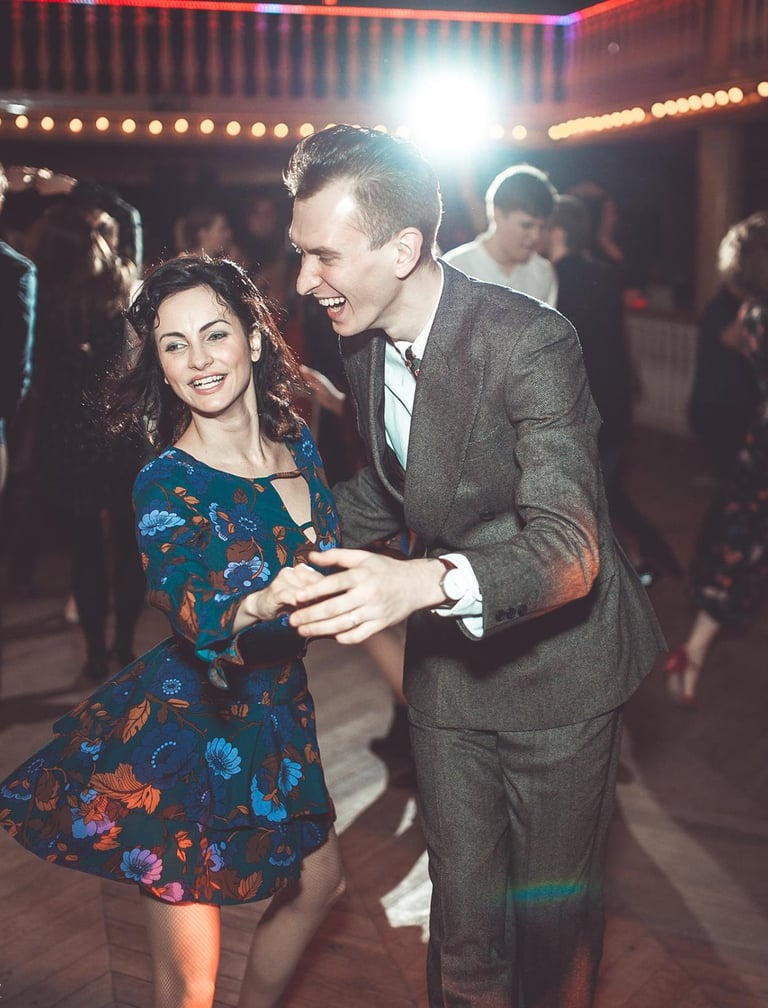
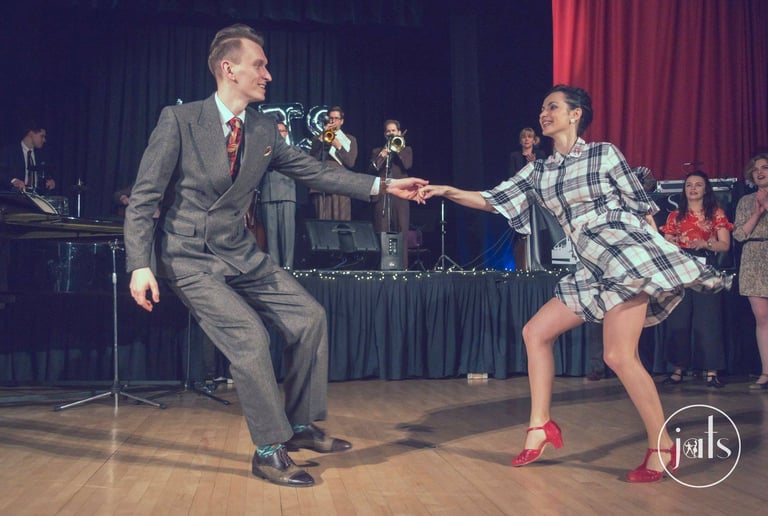
Mindaugas and Simona
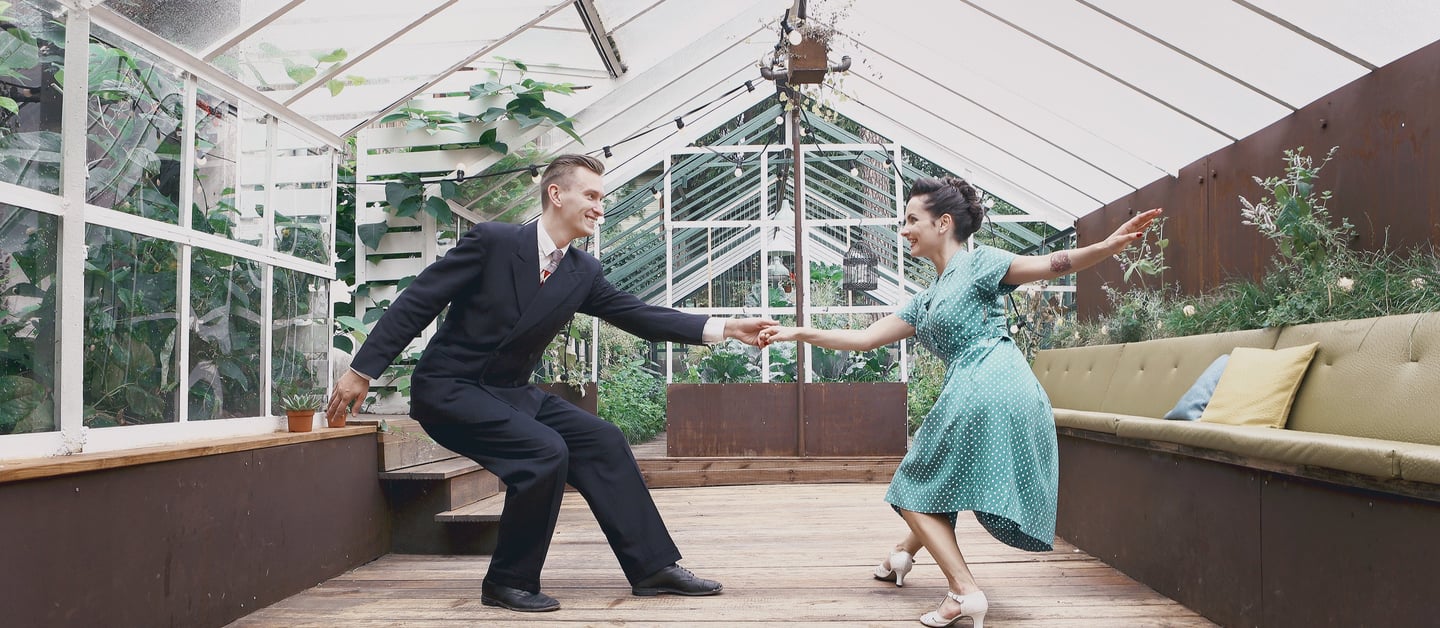
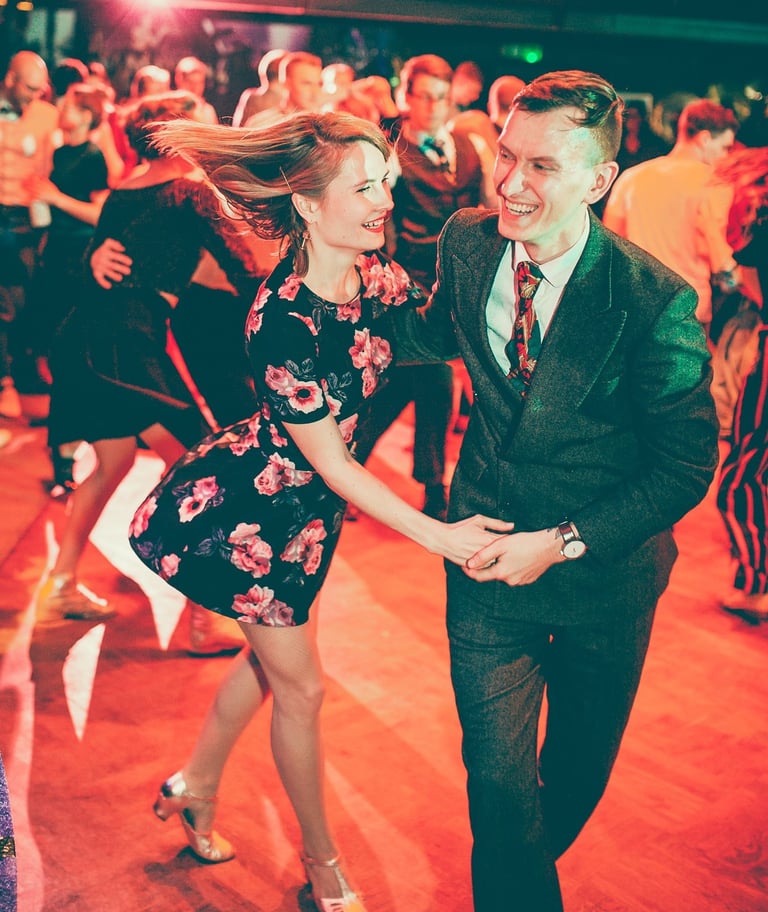
Simona and Mindaugas both started dancing at the same "Lindyhop.lt" club and helped grow the lindyhop scene in Lithuania. Everyone who attended their lessons says - "they know how to have fun and entertain." Mindaugas' clear dance lead and Simona's bright personality make them a perfect duo in lessons and performances.
Simona is famous for her extraordinary choreographic skills, which transform her jazz movements into an original dance story. Her ability to follow rhythms with ease makes her an excellent dancer and follower and also highlights her talent as a solo dancer.
Mindaugas biggest passion in jazz culture is music. Being a DJ and dancer, he had the idea to expand jazz culture on the Vilnius stage. in 2008 in the winter he started a group consisting only of dancers. Mindaugas says that the most important thing is to know jazz music from the inside. He is happy to share this experience with his students. And Mindaugas rhythmic playfulness not only enriches the dynamics of the dance, but also often makes his dance partner laugh.
This dynamic duo will make you love lindyhop!


What is Lindyhop?
Lindyhop got its name when on June 17, 1928, when the best dancer "Shorty" George Snowden, at the marathon held at the Manhattan Casino in New York, was asked by reporters what he was dancing here, he said "Lindy-Hop" or "Lindberg-Hop". The name is associated with Charles Lindbergh's transatlantic flight a year ago and the headline "Lindy Hops The Ocean" stuck in people's minds. The dance was formerly known as Breakaway, but incorporates many steps and elements from other African-American roots dances such as the Charleston, Texas Tommy, Cakewalk, Black Bottom, The Shimmy, and others. Although the dance itself stood out for its dynamism, open stance and tricks (English Air-Steps, Aerials). The first trick was presented to the audience by the Ambassador of Lindyhop and one of its innovators, Frankie Manning and his partner Frida Washington, competing with their troupe "Whitey's Lindyhoppers" against the troupe of the Savoly club dance king at the time, "Shorty George and His Dancers". This dance was started and enjoyed its golden age at the Savoy Club, the largest club in Harlem, New York. The dance became popular across the country after appearing on the gray screen in films such as A Day At The Races 1937, Keep Punchin' 1939, Hot Chocolate 1941, Hellzapoppin' 1941. Dean Collins, a dancer from New Jersey, who went to Los Angeles in 1936, improved the dance and changed it visually. The polished dance style was a fast track to the movie screens and with one of its most famous partners, Jewel McGowan, became a true L.A. representatives of lindyhop dances.
After the war ended and BeBop came into fashion, the spirit of both swing music and lindy-hop died out of the style of the modern jazz genre. As new styles of music became popular, dances adapted and Lindyhop changed visually, rhythmically, and names changed. Jive, Roc'n'Roll, Boogie Woogie and other dances appeared.
However, in the early 1980s, interest in lindy hop returned and the Lindy Hop Renaissance gained momentum. The young dancers found the old gurus - Frankie Manning, Al Minns, Fayard Nicholas, Norma Miller, Sugar Sullivan and others. The Lindyhop community in the world is growing, the dance lives and spreads joy like never before.


